
Searching the Douglas Court Docket
The Arizona Public Access Case Search lists Douglas Municipal and Douglas Justice as separate choices. Pick the court printed on your citation or pleading. A felony or general civil filing points to Cochise County Superior instead. You will need to type a verification word to get in. Name mode wants a last name or business name. Number mode expects the court’s formatted case number. Adding the year and court filters helps. Any Douglas court docket result becomes much easier to verify.
- Read the issuing court and case number from the newest Douglas notice.
- Retype the portal verification word and choose name or case-number mode.
- Select Douglas Municipal, Douglas Justice, or Cochise County Superior exactly.
- Compare the court, case type, filing status, parties, and newest events.
- Call the owning clerk when a case is absent or a hearing is near.
If Enter does not clear the verification step, click Submit. Public Access updates weekly, and Friday data reflects records through Wednesday. It is not the official Douglas court record.
Douglas Two-Court Docket Split
Douglas Municipal Court and Douglas Justice Court both serve the same city. Yet their dockets stay separate. Municipal Court hears city matters. JP2 keeps state-law misdemeanors and traffic cases, evictions, small claims, and limited civil files. It also handles the early felony steps. The continuing felony docket moves up to Superior Court after that. The shared Douglas label never moves custody from one clerk to the other.
| Douglas docket | Typical starting point | Record custodian |
|---|---|---|
| Municipal | City citation or ordinance | Douglas Municipal clerk |
| Justice | State traffic, misdemeanor, limited civil | Douglas Justice clerk |
| Superior | Felony or general-jurisdiction case | Cochise County Clerk |
Local ordinance violations never appear in the statewide results. Call Douglas Municipal Court before assuming a blank result means no city case exists.
Douglas Municipal Court Basics
The official Douglas Municipal Court page is the city’s own source for the court’s role and local procedures. It publishes the city channel a reader should recognize before moving on to the state index.

That page anchors the Douglas city-court route. A city charge, local-code case, or municipal setting belongs to that court. It does not belong to JP2 just because both sit in Douglas. Give the clerk the exact citation number and the name as printed. Ask whether the event is filed. Ask whether an appearance is required, and whether a later order moved the date. The state index shows some municipal cases. But it excludes local ordinance charges and updates only weekly.
Douglas Shared-Address Docket Detail
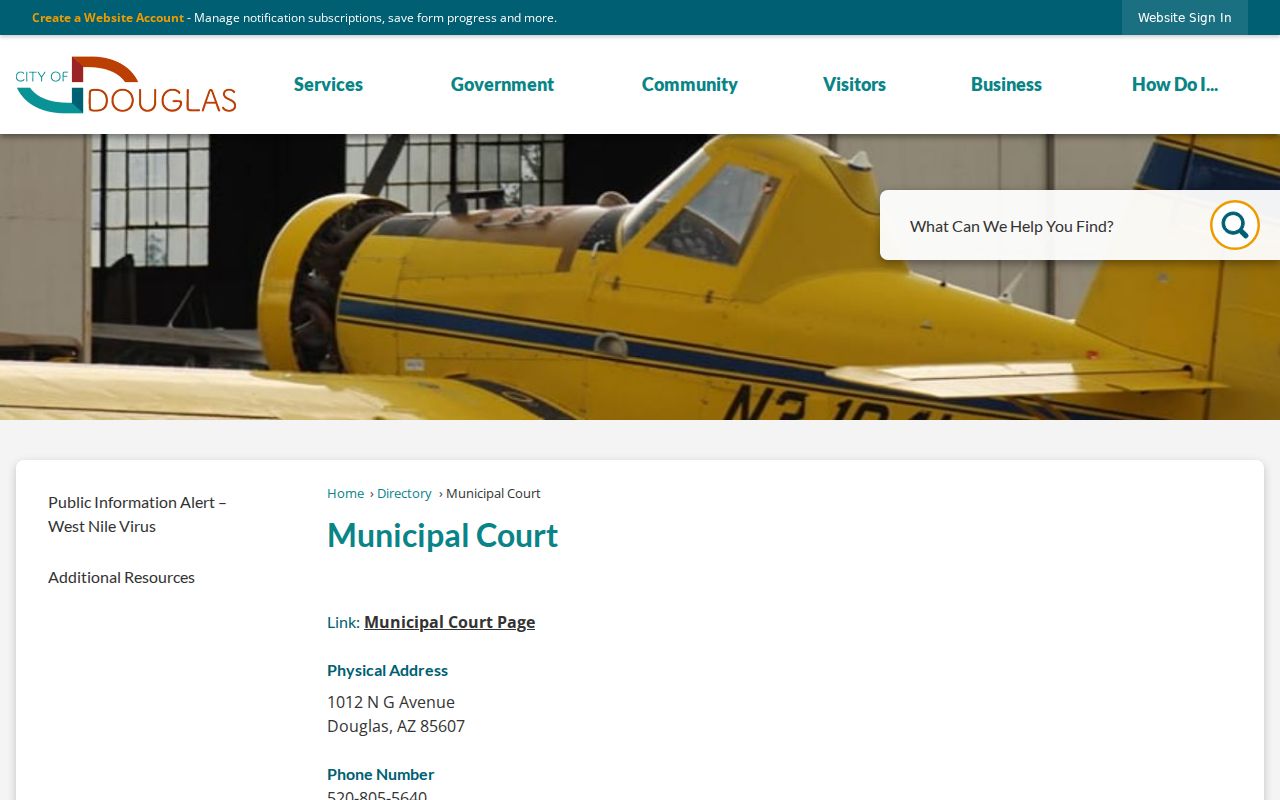
The official directory places Douglas court services at 1012 N G Avenue, Douglas, AZ 85607. Douglas Justice Court sits in Suite 237 at 520-805-5640. One building can suggest one clerk runs both Douglas dockets. It does not. At the counter, the question that matters is which court appears in the caption. The Douglas court directory gives the official building detail shown on that official page.
A street address is not a docket identifier. Bring the case number, citation, court name, and current notice. Staff can then route your request without guessing. Douglas sits on the border, which is one more reason to read the caption first. A city prosecution, an Arizona state case, and a federal filing can all grow from events in the same area. Yet they belong to three systems. Douglas Municipal and JP2 both show up in the Arizona selector. A Superior Court case uses the county choice. A federal case goes through PACER instead. Where the event happened cannot replace the jurisdiction. Nor can it replace the court name printed on the first filed paper.
Court Dates and Settings in Douglas
A Douglas court setting can appear in several places. Check a served notice, the newest case event, a minute entry, a court calendar, or the court’s internal schedule. Read the last entry first. “Continued” means the date moved. “Vacated” means one setting was removed, not that the whole case was dismissed. “Held” shows the event took place, and a later order may set the next step.
| Date | The latest controlling date, not the first date in the history. |
|---|---|
| Time | The appearance time or docket window stated by the court. |
| Court | Douglas Municipal, Douglas Justice, or Cochise County Superior. |
| Officer | The judicial officer listed in the event or minute entry. |
| Setting | Initial appearance, arraignment, pretrial, motion, trial, sentence, or review. |
Confirm near-term Douglas settings by phone. Ask whether the hearing is in person or remote, and which room or approved link applies.
Douglas JP2 Appearance Docket
Cochise County's standing order gives JP2 initial appearances a regular morning slot. That slot is 8:30 to 9:00 a.m. What happens there is narrow. The judge advises the person of rights and addresses release. Nothing about the final result gets decided, and it is not a trial. The court can shift a time to satisfy the prompt post-arrest requirement. So the newest Douglas order always wins over the standard window.
A felony may start at JP2 and then continue under a fresh Superior Court number. Search both Douglas Justice and Cochise County Superior whenever the history mentions a transfer or a preliminary hearing. Then read each setting next to the minute entry that follows it. That pairing tells you what actually happened.
Expect the early Douglas chronology to hold a complaint, an initial appearance, a release order, a preliminary hearing, and a transfer. All of that comes before the Superior Court record opens. Those labels say nothing about the outcome. The disposition of each charge shows up later, in the higher court. Bond terms sit in their own events and are never a finding of guilt. When the two files carry different numbers, ask JP2 or the Superior Court Clerk whether they cross-reference each other.
Note: The weekly state index can miss a last-minute Douglas reset. So confirm any imminent appearance directly with the court.
Traffic Tickets in Douglas
Where a Douglas traffic ticket lands depends on who wrote it. A Douglas Police city citation usually goes to Municipal Court. A state-law or highway citation may go instead to Douglas Justice Court. The agency on the ticket settles nothing by itself. Read the court named on the citation, then use that exact selector in Public Access. When the fields are supplied, the Douglas record shows the charge, the plea, settings, the judgment, the fine, and compliance events.
Payment has its own rules. The JP2 counter closes at 4:30 p.m. Personal checks are accepted except for restitution, suspended-license matters, and warrant bonds. A returned check adds $25. Coin payments cap at $5 per customer per day. None of that cancels a Douglas appearance. Criminal traffic requires interaction with the court first, and any civil-traffic reduction or dismissal must be confirmed with the cited court.
Douglas Payment Versus Appearance
A payment option, online or at the counter, is never a court order. It does not excuse you from showing up. Check the Douglas citation and the latest docket entry for any appearance requirement. One more county rule matters. If an attorney will appear for you in a Justice Court traffic matter, written notice must reach the court at least ten calendar days before the hearing. Without it, the right to representation is waived for that proceeding. Ask JP2 how to deliver that notice.
Do not skip a required date. A failure to appear can lead to a warrant, added collection fees, and tax-refund interception.
When a Douglas obligation moves into FARE collections, the county sends payments to AZCourtPay instead. Verify the case identity and the court before you pay. Keep your receipt. Then check whether a hearing or compliance step is still open.
The December 2025 Justice Court directory tells people asking about civil-traffic dismissal, a fine waiver, or a reduction to contact the cited court and, when needed, to attend or email seven to ten business days before the appearance. There is no universal Douglas eligibility rule or fee. The charge and the court's answer control. Write down the court name, the contact date, and the next required act, so a payment errand never buries a pending setting.
Where Douglas Cases Go
Douglas Municipal Court handles city matters within its own authority. JP2 makes the final call on many state misdemeanors, traffic cases, evictions, and small civil matters. Its felony work is preliminary only. The continuing felony docket sits with the Superior Court of Arizona in Cochise County, which also carries general civil and other broad trial jurisdiction. An appeal from a lower court can open a Superior Court event and number too.
Docket flow: Douglas Municipal Court › Douglas Justice Court › Superior Court of Arizona in Cochise County
Douglas sits on the border, and that adds a fork. A federal matter belongs to the U.S. District Court for the District of Arizona, searched through PACER rather than Arizona Public Access. An event in Douglas does not create a county case on its own.
Douglas Certified Docket Copies
A portal event is only an index clue. It is not the signed order and not a certified Douglas record. For a Municipal or Justice Court document, request it from that court's own clerk. In a Superior Court case, pin down the exact event, then use eAccess for an eligible post-July 1, 2010 civil or criminal image, or file the Cochise County records form. Certification is the clerk's way of authenticating a record.
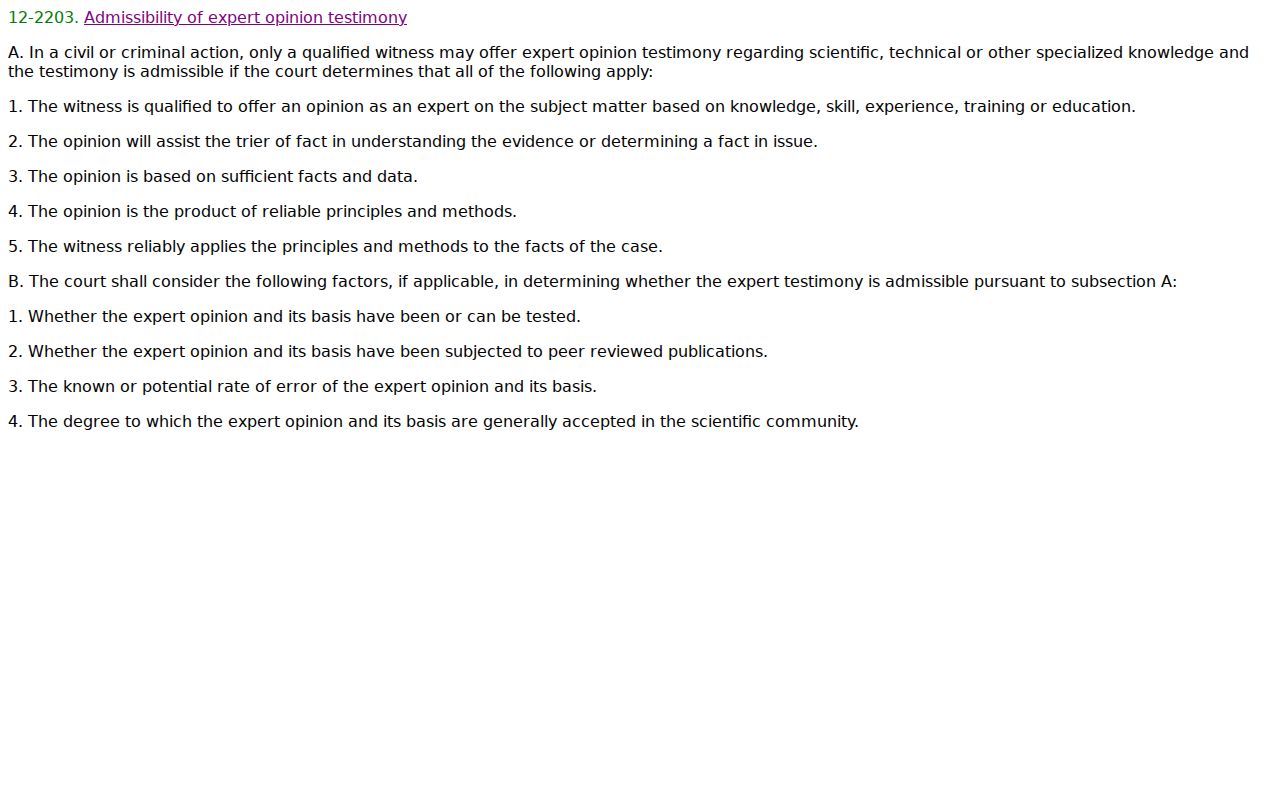
A.R.S. §12-2203 is the official Arizona statute spelling out certified copies and their fees.
Cochise County's revised records form sets certification at $35 per copy. Certified records cannot come back by email. The form does not list plain-copy rates or shipping costs, so request a quote rather than guessing.
Douglas Court Record Access Rules
Access to judicial records, including Douglas case files, runs through Arizona Supreme Court Rule 123. Remote access is narrower than what a person may view at the courthouse. Public Access leaves out sealed cases, protection orders, mental-health and probate cases, juvenile delinquency, victim and witness information, and local ordinance violations. Personal identifiers get protection as well.
Access boundaries:
Arizona Supreme Court Rule 123 controls public judicial-record access.
ACJA §1-604 limits remote electronic delivery in ways that may differ from courthouse access.
A.R.S. §8-208 governs access to juvenile records.
A missing Douglas result can mean the wrong court, a spelling slip, the year, the weekly lag, old coverage, or an excluded category. Ask the office that actually holds the file about permitted access. Only the originating clerk can supply or authenticate the official Douglas court record.
Douglas Clerk Fallback Chain
A missing Douglas docket usually has a simple fix. Start with both Douglas selectors and the most likely year. If nothing turns up, call JP2 at 520-805-5640 and ask about its docket directly. A city ordinance or city citation belongs to Municipal Court. Contact that court yourself. For Superior Court matters, the Cochise County Clerk Research Office at 520-432-8635 handles older, excluded, or unclear files. Public computers are available at the Bisbee and Sierra Vista Clerk locations. When you reach any of these offices, give the court, the case number, the party names, and the exact date of the document or event you want. That detail keeps the clerk from running a broad whole-file search. If a case crossed court levels, ask one question. Is a source number referenced in the file?
Need more county-level detail? The Cochise County case lookup covers it. Date questions about a Douglas case stay with the court named on the latest order. A Douglas Superior Court request has three routes. Email it to CochiseCountyResearch@courts.az.gov, mail it to P.O. Box CK, Bisbee, AZ 85603, or hand it in at a Clerk office. The form lets you choose inspection, ordinary email delivery, mail, pickup, or certification. One limit stands out. A certified item cannot be emailed. Fax is not listed as a submission route. The form promises no fixed turnaround. A Douglas Justice or Municipal request skips the county form entirely. It goes straight to that limited court.